By: Rachel Ellison Category: ART+FASHION Date: 20.Dec.2013
Knauf and Brown: Cut From The Same Cloth
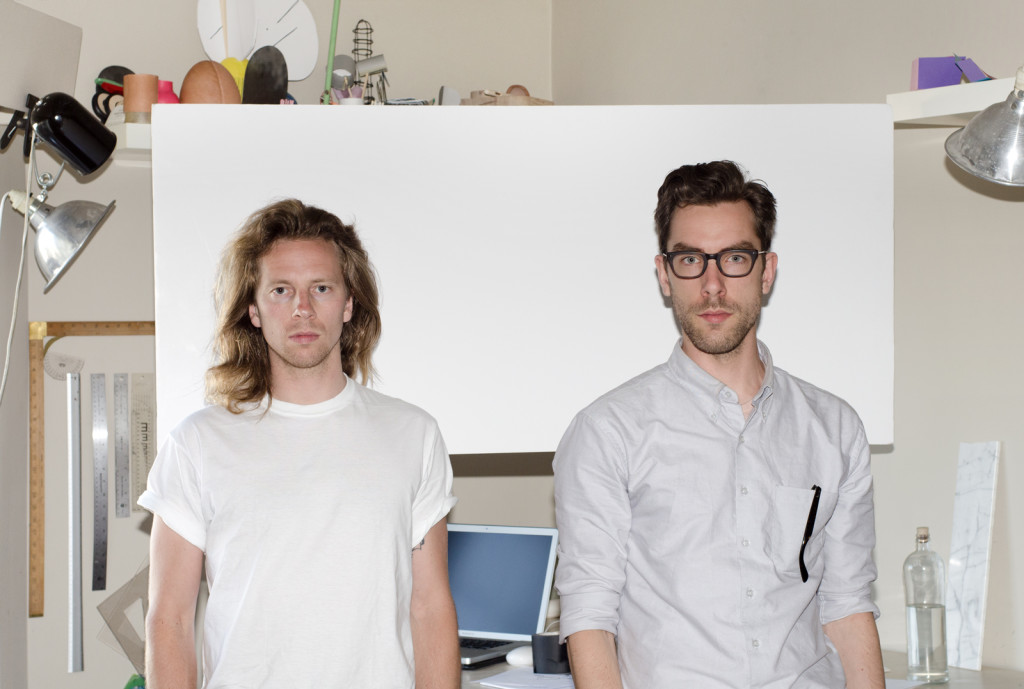
It’s a Monday at 4 pm when I wake up for my interview with Calen Knauf and Conrad Brown. Following a whisky fueled night ending at 4 am, the beeping that awakens me from my afternoon nap is no welcome sound. I log onto Skype at 5, over prepared so as not to rely on the improvisation skills 4 hours of sleep have stripped me of. I hope that they don’t notice the deep bags beneath my eyes.
I soon discover that I’d be hard-pressed to find an interviewee better suited for my hung-over state. They play off of each other like a couple of 50 years, turning my half-hearted questions into tales of art and friendship. The two boys make up Knauf and Brown, a design firm that dabbles in several artistic mediums, though is rooted in industrial design. The pair seems almost one entity; as if one starts where the other ends – what Calen has in boyish charm Conrad matches with insightfulness. They joke with each other and rarely disagree, complementing without competing, and using the term “we” and “I” interchangeably.
Though unbeknownst to them until post high school, Calen and Conrad have deep-rooted connections. They grew up in the same neighborhood and upon meeting quickly uncovered their parallel upbringings, both crediting their childhood with their foray into industrial design. Calen’s mother was a mover, exposing him to furniture just out of his reach, while Conrad, living a life full of second-hand cast-offs, always longed for nicer things. It was this longing that brought them together, despite Conrad’s mom’s effort to hasten the union. “My mom was one of his teachers in high school,” recalls Conrad, “at the time she would always be like, ‘oh you should meet my son, he skateboards’.”
They ended up meeting serendipitously soon after, and began skating together for four to five hours a day. And so a partnership was formed. Their love for the streets quickly turned into an aesthetic bond that highlighted their artistic prowess. “There was a lot of aesthetic criticism going on between us, pretty much since we met,” Calen recalls. Both originally pursued graphic design, though Conrad’s interests shifted to photography. “We reached a sort of dead end where we decided to go to school”, says Conrad, who, with his button-up and short, tapered hair, speaks to the practicality of an industrial design degree.
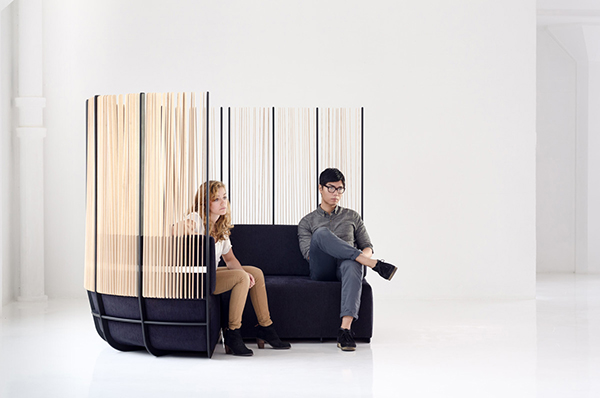
Today, recently graduated from Emily Carr, they live and work in Vancouver B.C., where the art scene is flourishing. They spent the last four years with matching class schedules, building an impressive portfolio that is featured in the likes of Designboom and Dwell. They’ve won two design awards in 2013 alone, and their website, though heavy on furniture design, boasts everything from photography to installations, with clients including Adidas and Stussy.
Their design work today is clearly influenced by their upbringing. Calen explains his young love affair with Herman Miller’s Eames chair, as well a father who was fascinated by the origins of design. “He would ask me, why do you think all those rods are in that thing, and I would sit there and think”, he says of his father’s push to make Calen a critical observer. As he matured, these questions lingered, and both he and Conrad began to form their own.
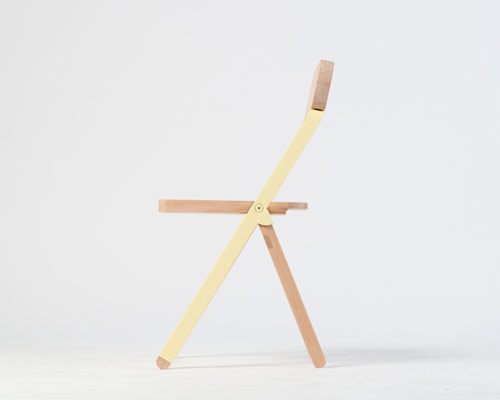
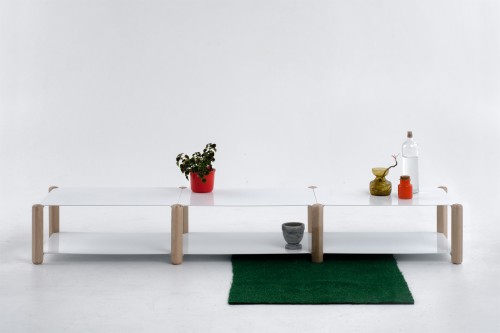
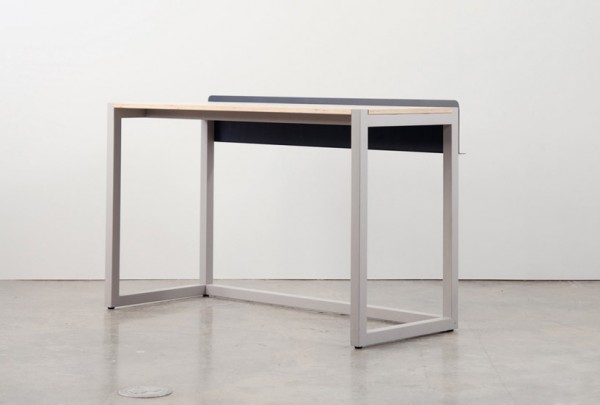
Combining minimalism with functionality and beauty, together the two have a knack for taking ordinary, often neglected items, such as the folding chair, and boiling them down to essentialism. Nine x Nine is a furniture system designed specifically for the sub 100sq/ft rental apartment. Even packaging of their products is calculated – their “flight lamp” comes shipped in an 11 x 17” flat envelope. When asked about fitting into a trend, Calen responds, “I would say what we do is try to be as honest as possible about how we form an object.”
Though they admit to having disagreements from time to time, their partnership is unwavering. In regards to collaborations with other artists during their schooling, Calen lets out a chuckle, “we didn’t really want to”. The ‘you complete me’ mentality, it seems, has thus far worked to their advantage. “If we were to both draw a picture, they would look very different, but if you overlapped them, they would then make something closer to what we would create together.”
They leave me with their future plans to make a bike lock holder, once again arising from a practical need. “I’ve been using one for the last 3 years and pretty much every second time I ride my bike someone comes up and asks me where it’s from,” explains Calen, breaking it down to simple supply and demand. Though it isn’t only about functionality. Speaking to his grad project research, Conrad “eventually came to the conclusion that [you like] something because it feels comforting and secure.” And perhaps that is precisely what brought these two designers together in the first place.