By: Stephanie Smith-Strickland Category: ART+FASHION Date: 29.Jan.2014
INTERVIEW: BLISS LAU
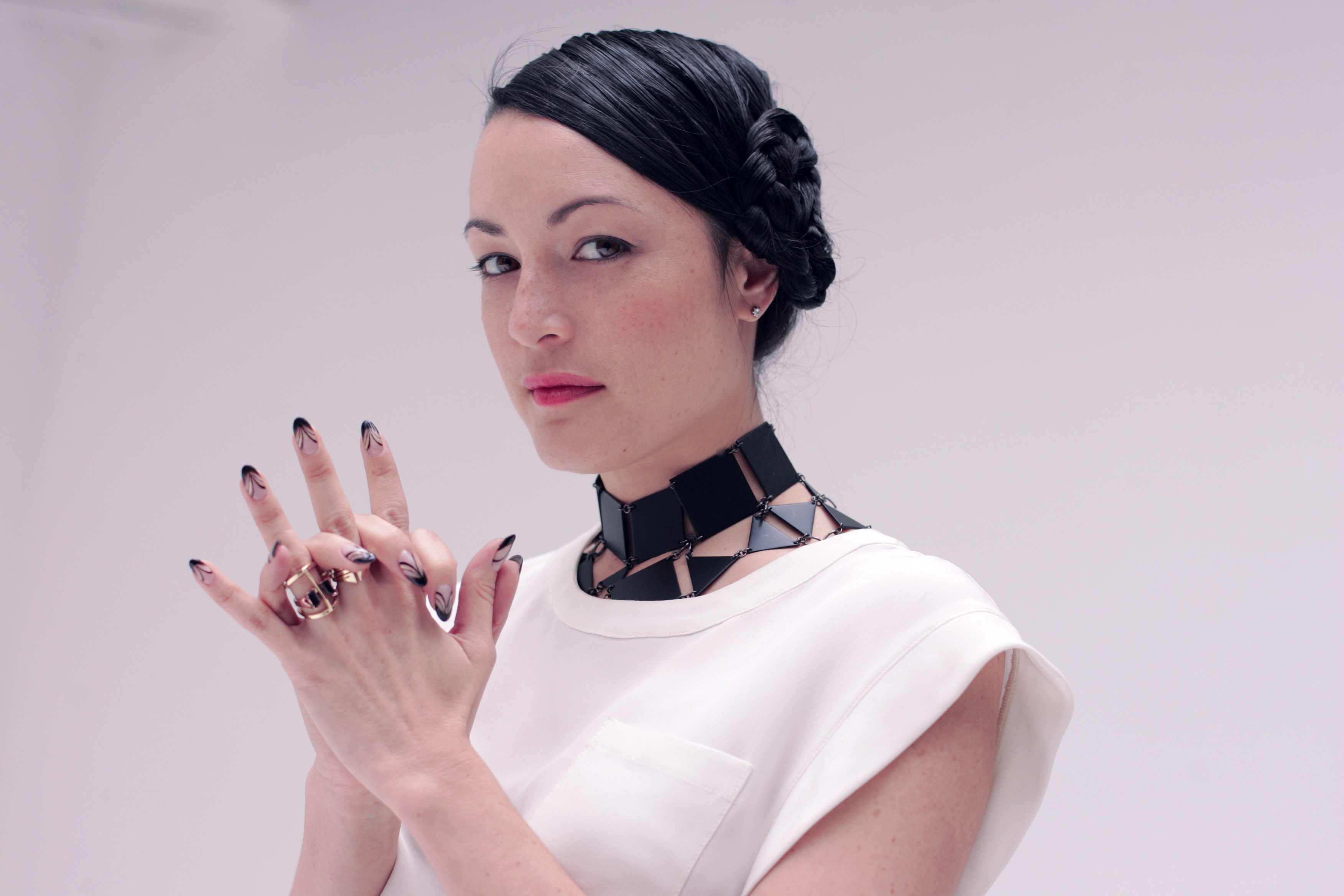
The fourth edition of Thomas Erber’s “Cabinet de Curiosities” marked a stateside debut for the much-anticipated exhibition which has already made its rounds at Colette Paris, Browns in London, and the storied Berlin concept store Andreas Murkudis. Erber’s smartly curated selections bring together the most exceptional work across art, fashion, high-jewelry, horology and more. Each item in these delightful cabinets of treasures (past and present) is a limited-edition piece, made especially for the exhibition. In this way Erber manages to consciously recontextualize luxury, elevating craftsmanship, exclusivity and aesthetic value far above price tag. The New York edition of Erber’s curiosities is available for viewing at the Maison Kitsune boutique and The Avant Garde Diaries Project Space until December 23rd.
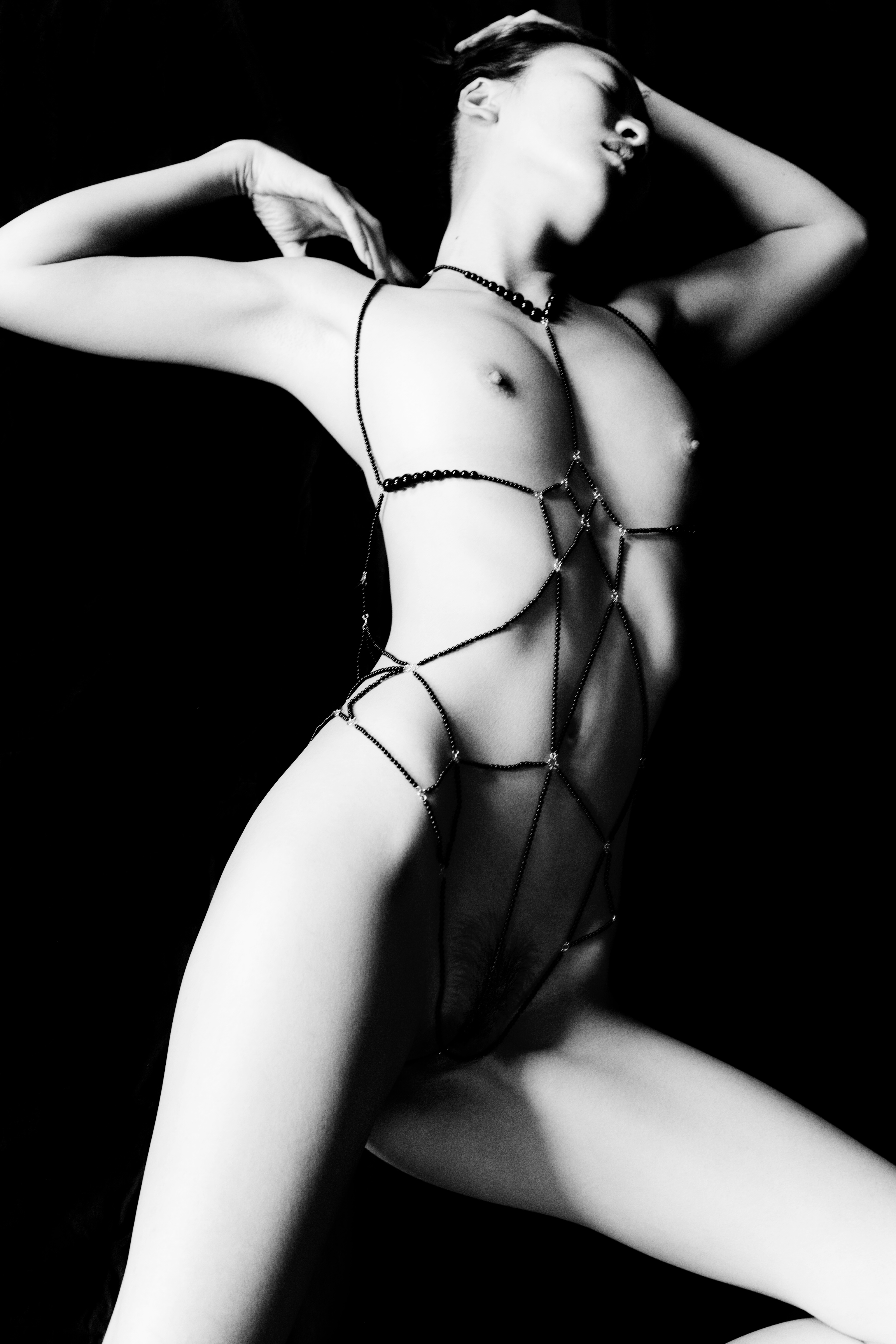
New York-based jewelry designer Bliss Lau presented one of the most intriguing offerings this edition: a black onyx and pearl studded full-body chain called Perfect Darkness. Named after the Richard Eberhart poem Eclipse, the chain was also inspired by the numerical perfection of the Fibonacci Sequence. At the opening, Bliss explained that she ultimately seeks to blur the lines between accessory and garment while providing the wearer with a transformative experience. Naturally we were intrigued, so we caught up with her afterwards to ask her more about her work.
Was this idea of blurring the lines between traditional accessory and garment inspired strictly by the Fibonacci sequence or was it something you had already conceptualized to some degree?
I have been exploring the process of how we wear jewelry since the birth of my first body chain in 2007. I feel strongly connected to working with the female form, and enhancing the body through lines and decoration.
The Fibonacci Collection is inspired by a fascination I have–or maybe it is all women–with a certain kind of perfection. Even Mona Lisa’s face was painted using the Fibonacci numbers. Not only are they found in the Parthenon but in nature, from inside plants and shells. I think this idea is endlessly interesting to research.
You’ve said that your multi-cultural background is often a point of reference in your design. Is this still true in the Fibonacci collection? If so, how?
In retrospect, I realize the choice of black volcanic stone (onyx) and natural pearls is absolutely a reference to my upbringing in Hawaii. Pele’s tears are a much told story in the islands. I see a beautiful parallel to the story behind Venus and the creation of onyx. Legend tells that Cupid accidentally cut off Venus’ fingernails and they fell into the stream below. Because the body of gods is divine, the gods chose to turn them to stone and named them onyx. If you look up the etymology of onyx it says claw or fingernail.
In your presentation for Le Cabinet de Curiosities as well as past collections, you’ve referenced poetry as a point of inspiration. Who are some of your favorite poets and how have they imprinted on your work?
I love creating a tangible product from an intangible. To me, poetry represents a purity of emotion, it is wonderful to express those words through design. I did a full collection last year in response to Anais Nin’s poetry; she is my favorite poet. The Lost in Light bra was created for her and has become a signature in the collection I make exclusively for Kiki De Montparnasse.
Tell me a little bit more about the stones and metals you selected and what they mean in the context of design, and for you personally. (I’m curious about this because you were inspired by the Fibonacci series and the golden ratio as well as the symbolic meaning of certain stones in ancient cultures.)
I developed the idea for the Fibonacci collection two years ago and spent a year doing research to choose what materials to translate the sequence in.
I chose to focus on how cultures viewed black and white and various materials. It is interesting to discover that throughout multiple cultures onyx (black) is seen as a protectant agent from evil. In Persian culture onyx is know as a repelling stone, in Egyptian culture onyx is said to help you become the master of your own fate.
Alternatively, the pearl (white) in many cultures represents perfection. A Persian legend tells that pearls were created when a rainbow met the earth after a storm. The Greeks describe pearls as tears of the gods. The Koran describes pearls as a symbol of perfection.
You’ve described your newest collection as “a sensual armor for the body which strikes a balance between the soft and hard, and positive and negative.” What else do you want people to see when they look at your pieces?
It is less about an onlooker’s experience and more for the woman who wears them. Each pearl and onyx structure forms a skin over the body, holding down points on your form that are comforting and require a specific presence in posture and body awareness. Try one on and you will see.
Tell us a little more about your past collections and their inspirations.
It started with positive and negative space. Imagine a button-front shirt. When we subtract the positive space we keep only the negative seam-lines of the garment. This was my inspiration for the first collection; they were artistic suggestions of garments: the bolero, the hugmetight.
I was also inspired by direct visual references like the art deco buildings in New York and the Brooklyn Bridge. After that I moved on to inspiration from a feeling, like my Embraced Collection in which the piece wrapped around the body and physically felt like an embrace when worn. Each collection informs the next, it is a constant evolution!
Your first collection was handbags, when did you make the transition to jewelry? Was it something you always wanted to do?
I hesitate to say any designer can predict the future of their product! I studied apparel at Parsons the New School for Design, and as an alternative to apparel launched my thesis collection of handbag’s. I transitioned into body-jewelry in 2007, and recently transitioned the collection again this year to working on only fine jewelry and materials.
I don’t see a red line that says I can only use one medium in this life. I suppose that is why I continue to push forward and challenge myself creatively; each new product brings a different set of problems to solve and a wonderful world of solutions.
You’ve stated your work is also “an exploration of form” what is it that you find so fascinating about the body?
Dressing the body means dressing the woman, this is my fascination. The Fibonnaci Collection is meant to beautify and strengthen women by allowing them to feel powerful in a unique and identity defining piece of alternative jewelry.
You’ve said that each collection is forged from the experiences of the last. Tell us a little bit more about that and how you carry ideas from one collection over into the next.
My designs are all very personal. Creating a collection is something I do alone in a room. It is a private experience that is oftentimes daunting and painful. I go through huge ranges of emotion, asking myself questions in order to come to an answer that will then be exposed. This private moment soon becomes a very public conversation.
I have a few ideas that I will be working on my whole life. If you look, you’ll see that so many artists have committed themselves to a single technique. Giacometti and his sculptures or Picasso and cubism, I think suspension is that for me. I intend to explore it from every angle. Each season more about what my clients like and how they experience pieces, and that is carried into the following season.
What new discoveries have you made from collection to collection?
Each collection is brought to life as both a deeply researched concept and a reaction to the world around me. I travel the globe showing my pieces to people of all cultures and I am constantly discovering new things with each coming season. In Tokyo and Taipei my jewelry was received differently than Paris or New York.
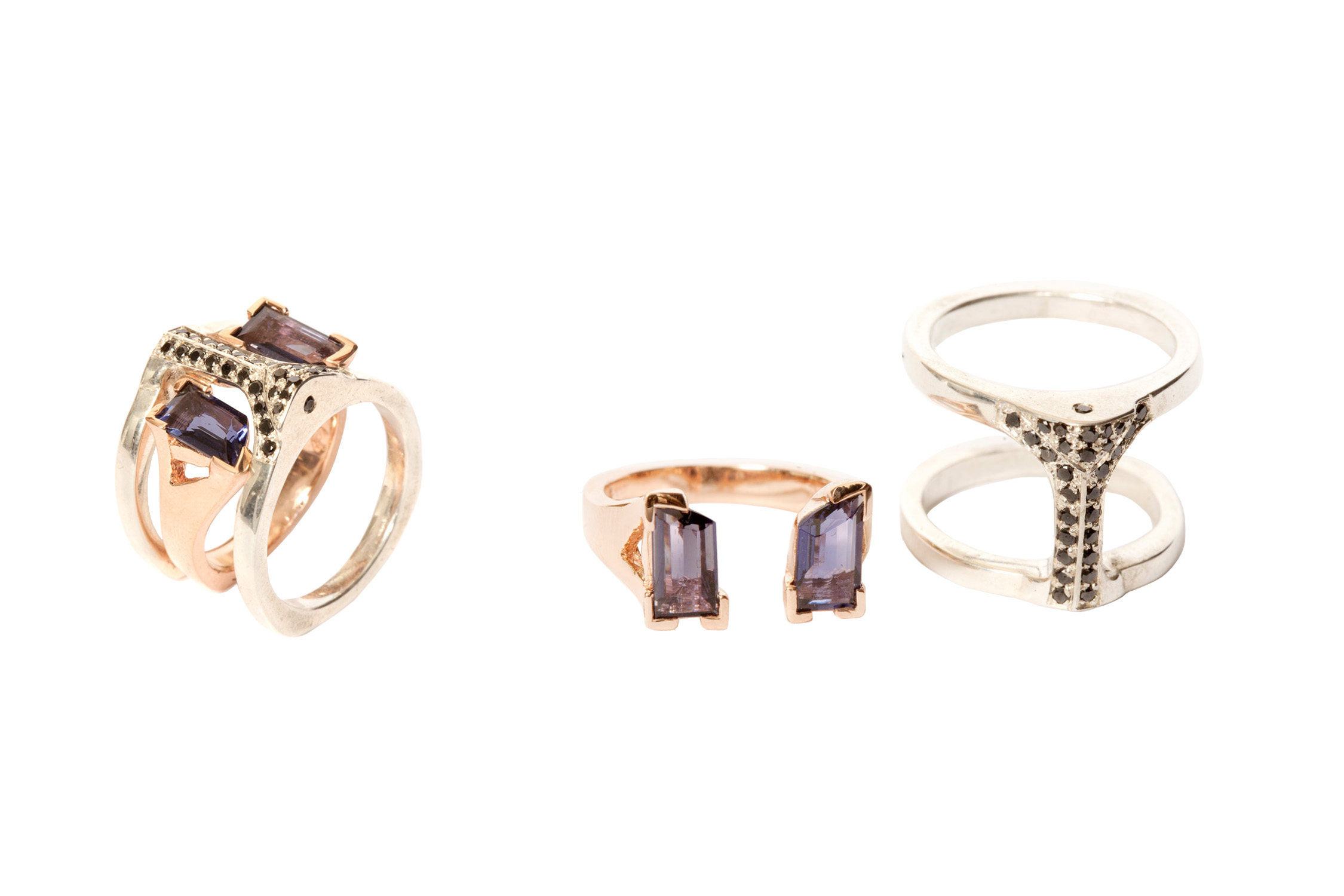
I start each new idea with a question: “What is jewelry?” was my first question. Now that has been redefined by my first collection of body chains which is now accepted in the visual vernacular of jewelry, so I have moved on. My next question was: ‘what is a ring?’ Is it a single, solid form? was the question I asked when creating the four part Kaleidoscope Ring.
What have I discovered? These are my secrets, not everything can be shared….
How would you describe your body of work in one word?
Exploration.